tools
Article 15 of 20
A Soldering Iron and a Stand
A good plan is to buy a temperature-controlled iron and a stand together. Get the iron from a source that sells the real thing, and use the stand that belongs with it.
As an Amazon Associate, Plenty of Patterns earns from qualifying purchases.
A good plan is to pick a soldering iron that lets you adjust the temperature, and to get a stand for it at the same time. A simple on-or-off pencil iron only has one heat, and different jobs at the bench work better a little hotter or a little cooler. The stand matters just as much, because a hot iron needs a safe place to sit every time you set it down.
The tip gets hot enough to burn you in an instant. There’s a short note on how I treat a hot iron — the tip usually runs somewhere around 700 to 900°F while you solder, and it belongs in the stand whenever it is not in your hand. Use a wet sponge or a tip cleaner, and unplug the iron when you step away.
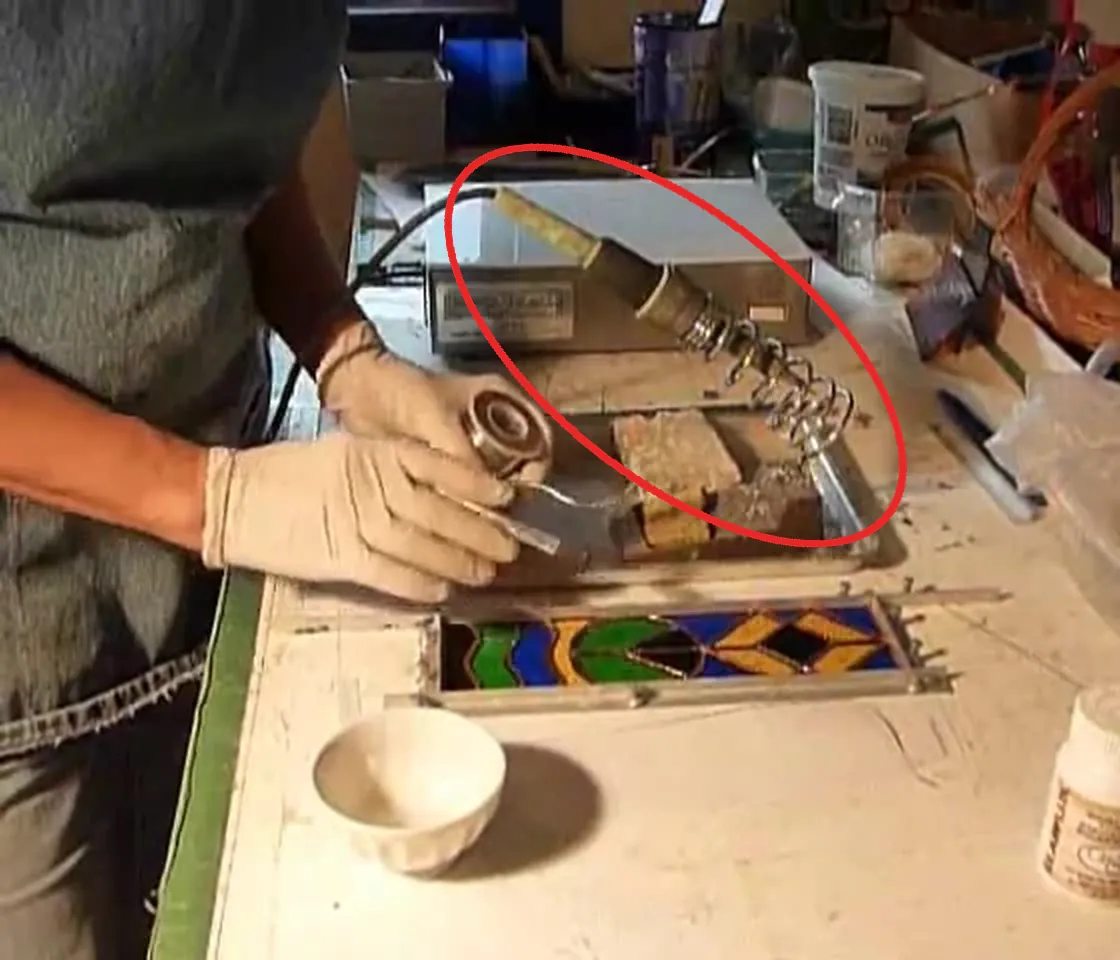
A little thing I do is keep my iron, stand, and sponge together in a small metal tray. It’s a simple safety habit: everything hot has one home on the bench, and if a drip of solder or the tip ever slips, it lands on metal instead of your table.
A good iron stand has a heavy, weighted base, so it stays put on the bench and won’t tip over when you drop the iron back in or bump the cord. The iron rests in a metal coil or holder that keeps the hot tip up off your work surface. Most stands also have a little tray at the bottom for a sponge. Keep that sponge damp, not dripping, and give the tip a quick wipe on it as you work so solder flows cleanly. If you have a stained glass shop nearby, that’s a nice place to look for an iron and a stand. If not, here are a couple to look for on Amazon. One stand that fits the Hakko FX-601 and comes with its sponge is the Hakko Soldering Iron Stand with Sponge (Shop in USShop in Canada).
One iron many stained glass studios already know is the Hakko FX-601 (Shop in USShop in Canada). Hakko markets it for stained glass and gives it adjustable temperature control. Those are Hakko’s claims, not a test I ran at my bench, and it isn’t the only good iron. If you buy any iron, get it from a source that sells the real thing — Hakko warns about counterfeits — and use the stand that belongs with it.
Once you have an iron you can trust, you still need copper foil, then flux and soldering once every foiled piece is in place. The solder only flows and sticks well when the foil is clean and brushed with flux first. And please, give the fumes a way out of the room before you start a long seam.