tools
Article 13 of 20
A Work Board You Can Pin To
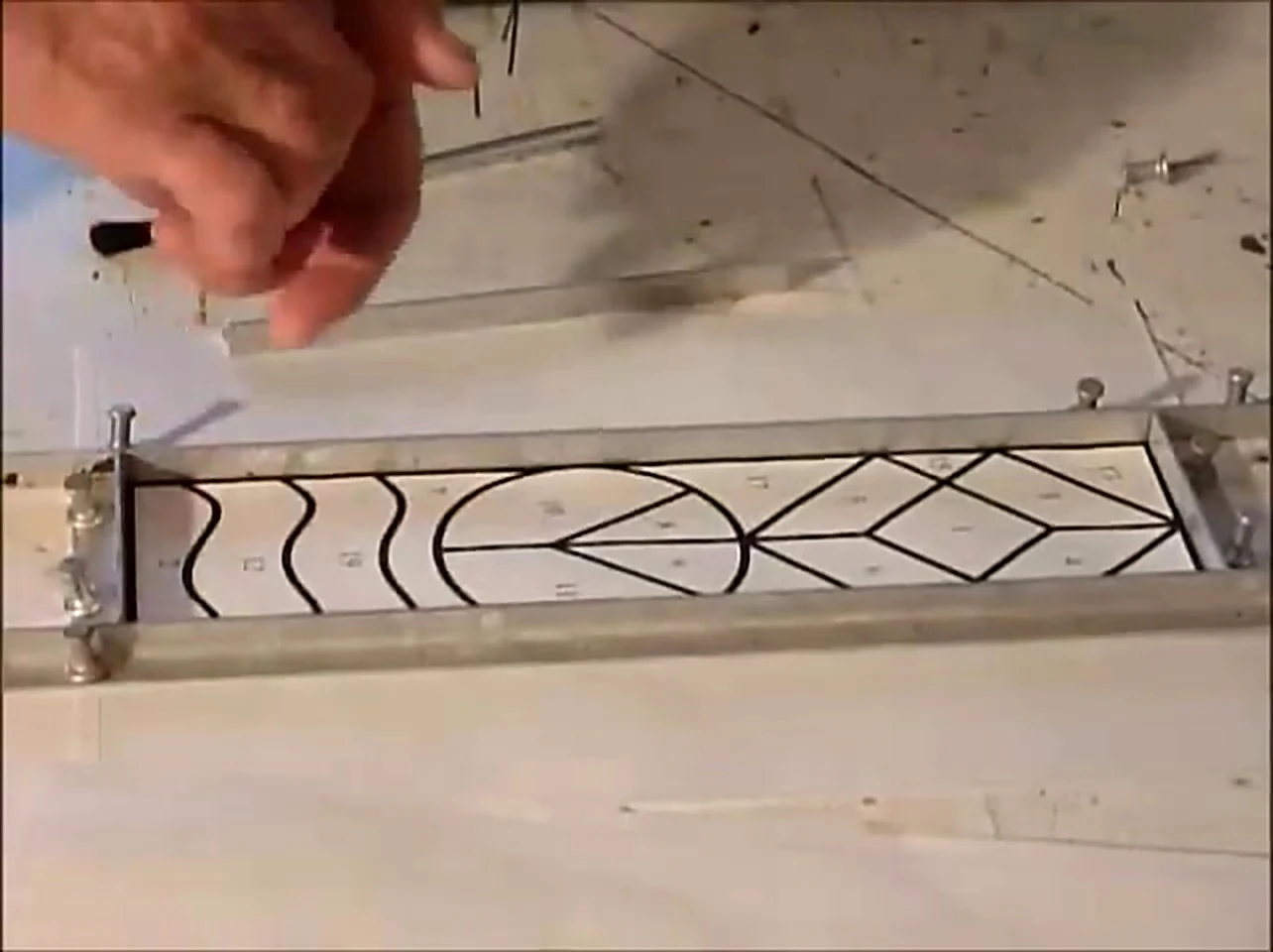
A soft board you can pin into, like a ceiling tile, keeps foiled pieces from drifting. Push pins and metal edging strips around the pattern hold everything snug.
As an Amazon Associate, Plenty of Patterns earns from qualifying purchases.
It helps to have a board where the pattern can lie flat and the foiled pieces can be pinned snug while you tack them together. Every stained glass project needs a working surface to be built on, and the size of that surface depends on the size of the project.
I like ceiling tiles — one or two from a local hardware store is all you need for a work board — with the edges taped in masking tape (Shop in USShop in Canada). They handle the heat of the solder, they take tacks easily to hold the pattern and pieces down, and they’re reasonably priced. A tile may start to look well used, but it can be reused for a very long time, project after project. (The Morton system I use is something different: that’s the grid I cut glass on, not the board I build on.)
Have your work table or workbench at a comfortable height.
This is just the working area, where your pattern gets pinned down and organized. Once that’s set up, you move on to the rest of the building process: cutting your pieces, wrapping them in foil, and so on.