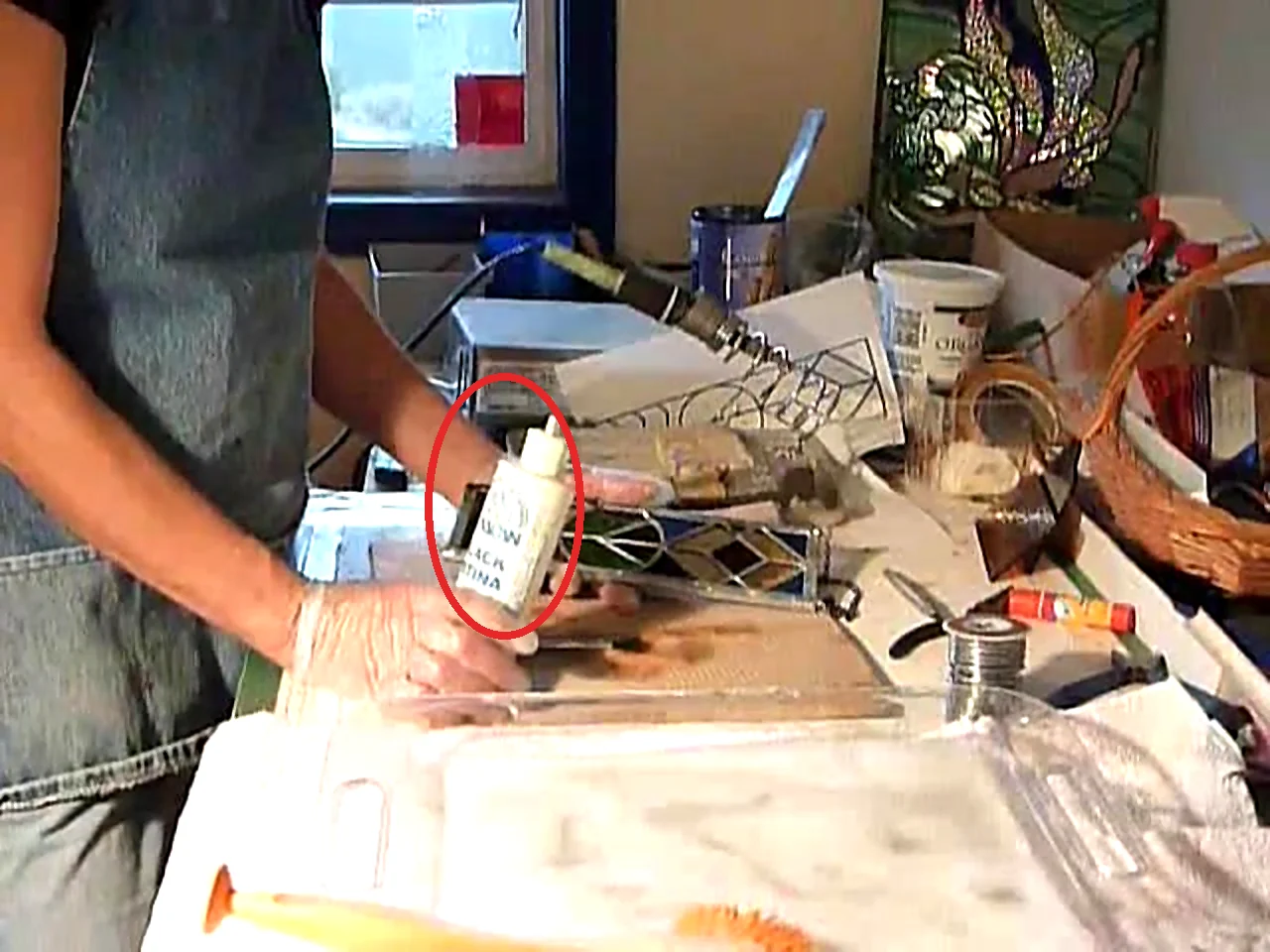
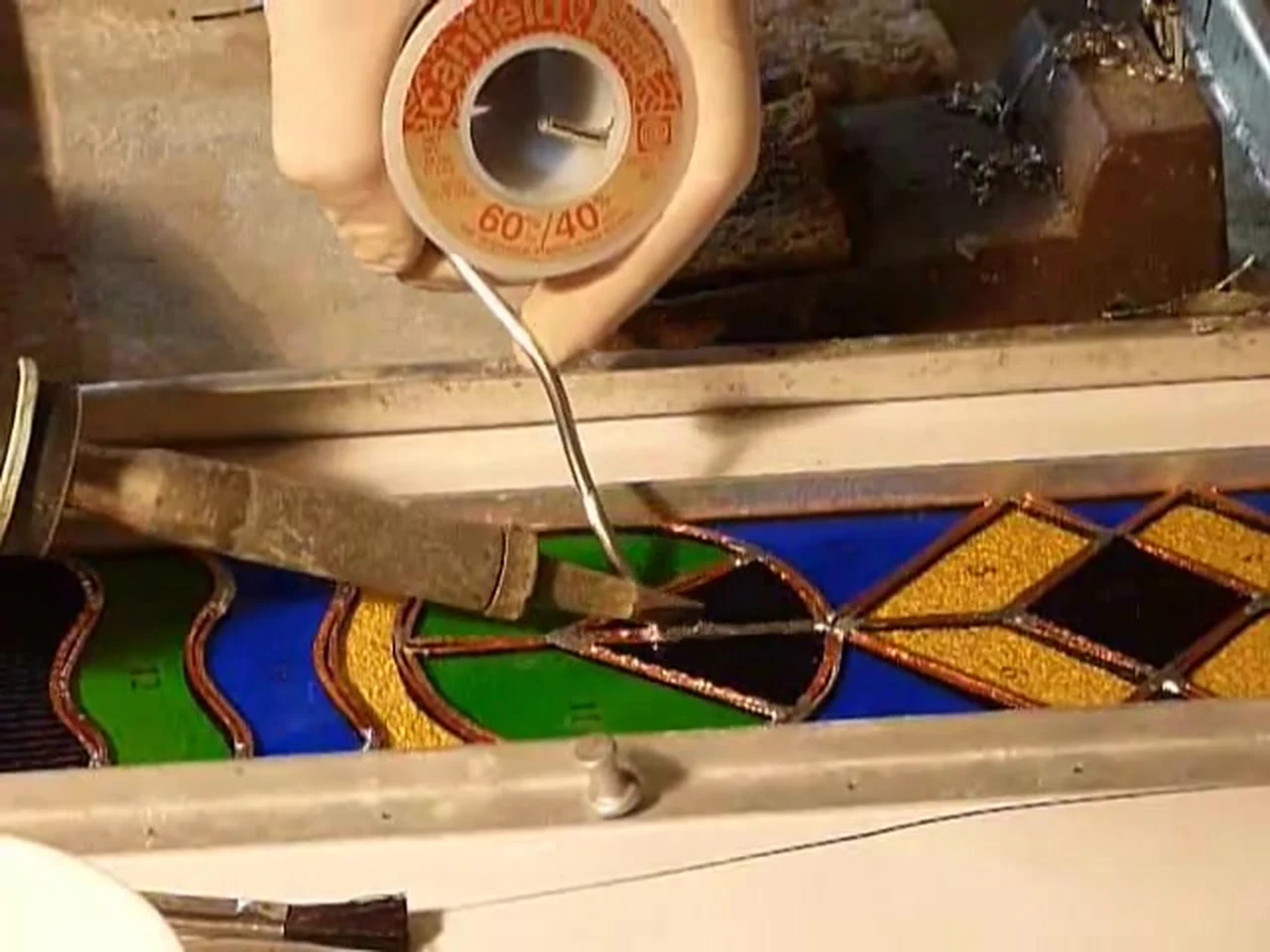
patina
Article 19 of 20
What Is Glass Polishing Compound?
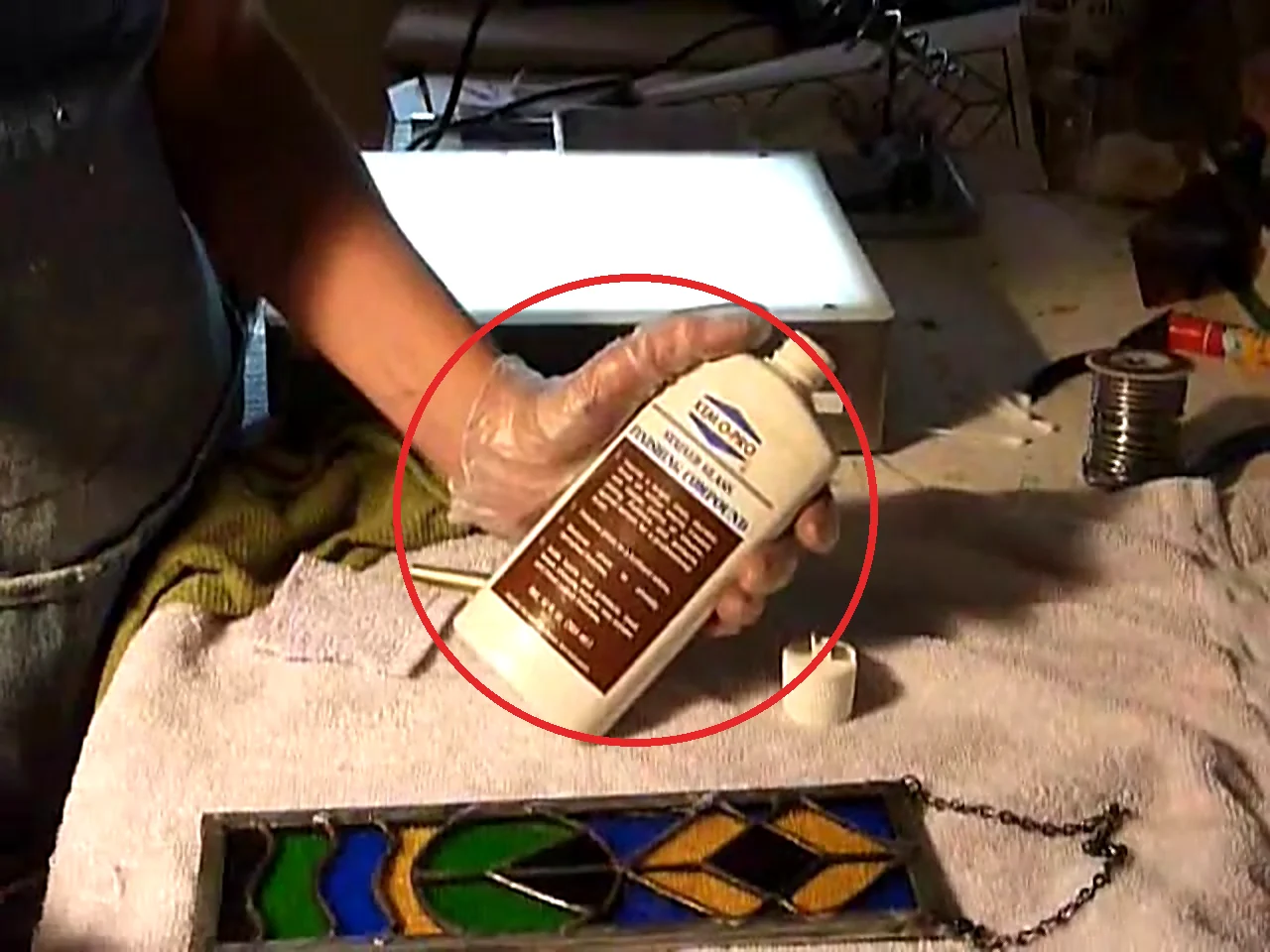
Finishing compound is a wax-type polish rubbed on after soldering and patina. A thin coat, a buff, and the glass and metal both pick up a shine.
As an Amazon Associate, Plenty of Patterns earns from qualifying purchases.
Glass polishing compound, sometimes called finishing compound, is the last step on many copper foil pieces. After the soldering is done, the flux is washed off, and the patina (if you used one) has dried, a thin coat of compound is rubbed over the glass and the metal lines, then buffed. It is usually a wax-type polish, not a grinder compound and not a household glass spray.
Makers of stained glass finishing compound say it polishes the glass to a shine, evens out the look of the solder, and helps protect the metal from tarnish. Those are the maker’s claims, so follow the directions on the bottle you buy. A simple way to start is to shake the bottle, put a little on a soft cloth, spread a thin even coat, let it dry to a haze, and buff it off. A soft brush can help get dried wax out of tight corners. A little goes a long way.
This is still a bench chemical, even if it feels more like a polish than flux or patina. Gloves are a good idea, and when you’re done working with chemicals, wash your hands in the sink with soap.
If you can pick this up from a stained glass supplier near you, that’s a nice place to start. If not, here’s one to look for on Amazon: Clarity Stained Glass Finishing Compound (Shop in USShop in Canada), a 12-ounce carnauba-wax polish made for stained glass. Clarity describes it as a polish that cleans and waxes the glass and helps protect solder seams, including seams that have been treated with patina.