safety
Article 8 of 20
Cleaning Up Glass Slivers
Sweep slivers with a brush, never with a bare hand. Keep scraps in plastic containers or little boxes, and then wash your hands.
As an Amazon Associate, Plenty of Patterns earns from qualifying purchases.
Glass slivers are easy to miss and easy to find later with a fingertip. Sweep them with a brush, never with a bare hand.
A little bench brush is a must-have. A small brush and dustpan is one of the handiest things to keep nearby. A quick sweep after cutting or grinding keeps tiny slivers off your work surface (and out of your hands). Use the brush, not your hand. If there’s a stained glass supplier near you, they often carry a little bench brush, and it’s nice to shop local when you can. If not, here are a couple to look for on Amazon. Something like the Delphi Glass Bench Brush (Shop in USShop in Canada) works well, or a compact dustpan and brush set such as the OXO Good Grips Compact Dustpan & Brush Set (Shop in USShop in Canada). It’s a good idea to keep this one just for glass, so slivers don’t end up in the kitchen.
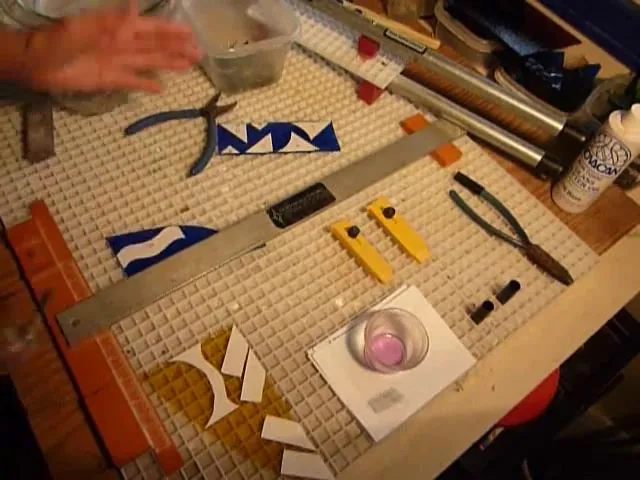
I always do my cutting on my Morton system and not on any other surface. The small bits of glass fall down into the grid instead of scattering across the bench. As I cut, I keep the leftover pieces sorted with the glass I’m using in the project, and I use little containers for the smaller pieces. Anything big enough gets saved for mosaics or other glass projects. If you sort as you cut, it’s much easier to find and use those pieces later.
I keep my glass scraps in plastic containers and little boxes, things like old cottage cheese tubs and other handy containers around the house, and never in a soft bag that the glass can poke through. When it’s time to get rid of glass garbage, follow whatever method your community’s recycling program suggests.
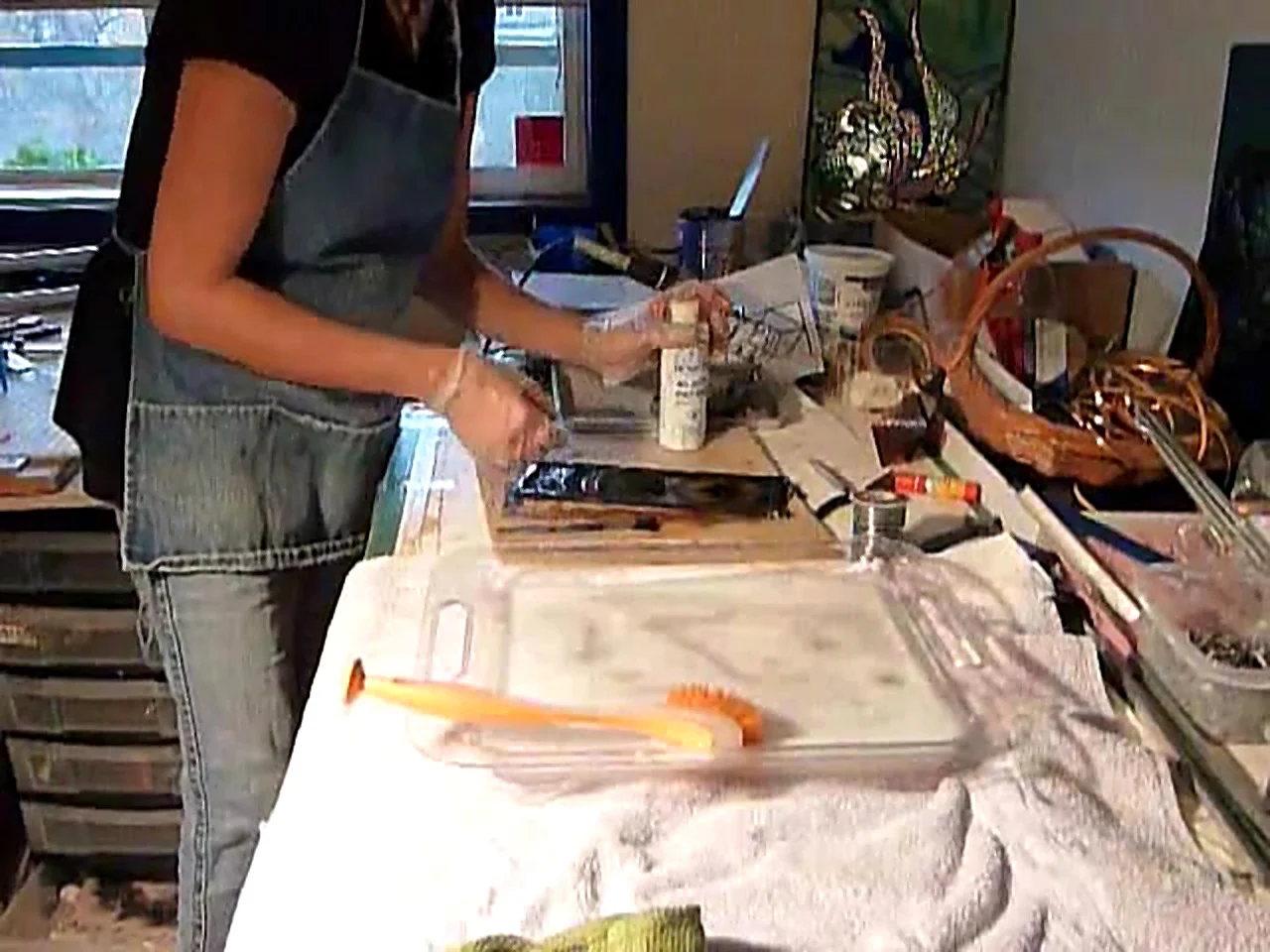
The rest of the closing routine is just as simple. Unplug the iron and let it cool in its stand. Wash flux off the glass with dish soap, warm water, and a soft brush. When you’re done working with chemicals, wash your hands in the sink with soap. Keep a small first-aid kit (Shop in USShop in Canada) where you work: antiseptic, bandages, tweezers for a sliver (Shop in USShop in Canada), and an eyewash (Shop in USShop in Canada). If a chemical gets in your eyes, follow the product’s safety sheet (usually a long rinse with water) and get medical help if it still burns or stings.
None of this is meant to scare you away from glass. I have loved this craft for a very long time, and I hope you last at the bench, with all of your fingers, so you can enjoy the part that made me stay: the way a piece of glass comes alive when the light hits it.