safety
Article 7 of 20
Lead and Washing Up
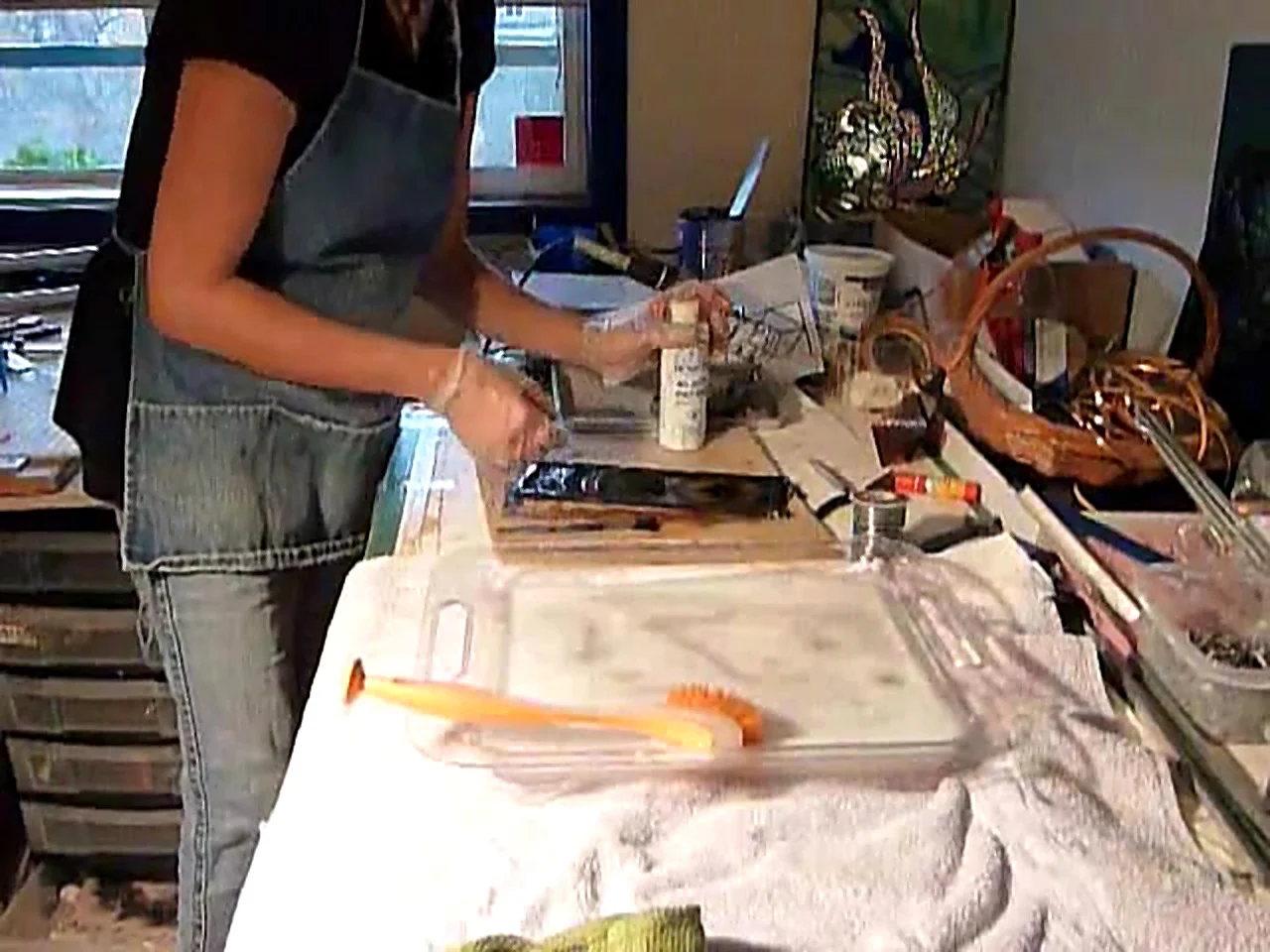
Keep food and drinks off the bench. Wash with a soap made to remove lead, and change out of work clothes before you walk through the house.
As an Amazon Associate, Plenty of Patterns earns from qualifying purchases.
Many stained glass solders are made with tin and lead, and traditional window came is lead. Lead is a poison. The useful question is how people actually pick it up at a hobby bench, and how to lower that chance.
Swallowing lead dust and residue is a central concern. It can ride on your hands to your mouth, settle on a snack, or travel home on clothes and shoes. The U.S. Centers for Disease Control and Prevention (CDC) and the National Institute for Occupational Safety and Health (NIOSH) advise: do not eat, drink, or smoke where lead is present; try not to touch your face and mouth; and wash your hands with a soap made to remove lead (Shop in USShop in Canada). NIOSH also notes that ordinary soap and water are not enough to completely remove lead dust. A good habit is to keep food and drinks off the bench, and to wash up before you leave the room.
You cannot always see or smell lead dust or fumes. A soldering iron melts solder; that is not the same as saying nothing is in the air. Ventilate, try not to make dust on purpose, and clean up carefully. It’s better not to dry-sweep the bench or blow it off with compressed air. Wipe with a damp cloth. NIOSH recommends wet cleaning, or a vacuum made to pick up very fine dust.
Lead residue also travels. A good plan is to change out of work clothes and shoes before you sit on the sofa or walk into the kitchen, and to wash those clothes separately. NIOSH has plain-language pages that are worth reading for yourself: Information for Workers and Understanding Your Risk for Lead Exposure.
This is studio practice, not medical advice. If you are pregnant, planning to become pregnant, or breastfeeding, or if you are worried about exposure, talk with your doctor. A healthcare provider can check for lead in the blood. I am a glass artist, not a clinician, and I will not quote “safe” numbers.
When the work is done, sweep up and put the slivers away, then wash your hands in the sink with soap. Then it’s time for a cup of tea.